
Case study · 07
2024 · Microsite development & headless CMS integration
Provepharm
A pharmaceutical microsite built on a headless WordPress publishing stack.

- Year
- 2024
- Role
- Microsite development & headless CMS integration
- Stack
- Next.js/Vercel · Faust.js · WordPress/WP Engine
- Status
- Archived reference deployment; no longer the company’s current website
Selected views
The work, before the process.
Two representative views establish the range before the case study moves into the decisions behind them.
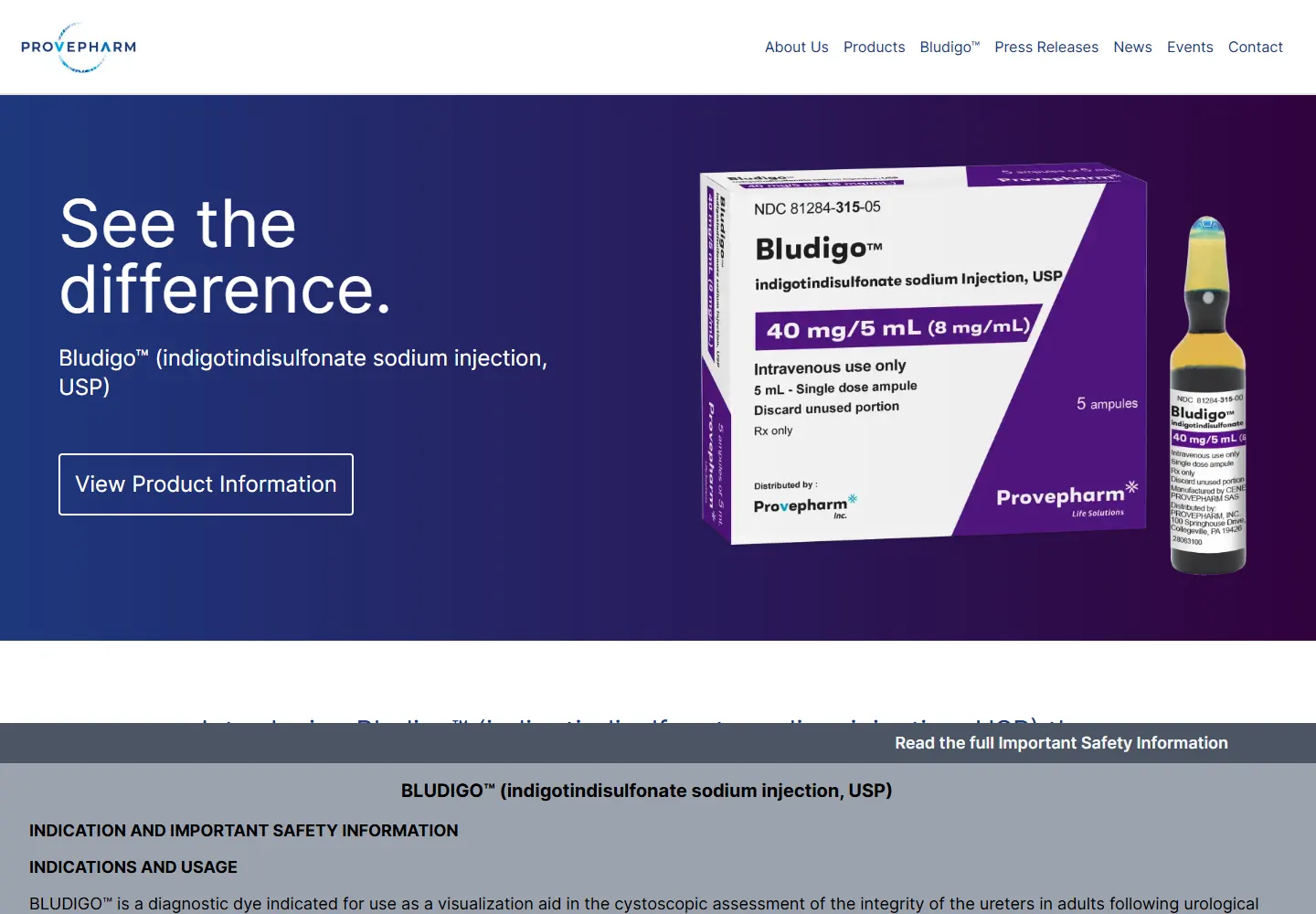
Bludigo product page
The product experience balanced brand imagery, product information, and required safety content.

Company story
Mission and company-history content used the same headless publishing model as the product catalog.
Project story
A focused pharmaceutical microsite with publishing kept behind the scenes.
I built Provepharm’s former microsite as a Next.js frontend for company, product, news, press-release, and event content, while the editorial team continued managing structured records in WordPress.
Faust.js and GraphQL connected the Vercel frontend to WordPress on WP Engine. The deployment shown here is an archived implementation reference, not Provepharm’s current website.
01
BriefCorporate publishing and product detail shared one public experience.
The microsite combined mission, history, pharmaceutical products, press releases, news, and events. Reusable page patterns kept those formats related while allowing product pages to carry deeper information and required safety content.
02
PublishingEditors kept WordPress; visitors received a focused frontend.
Company, product, and newsroom records remained in WordPress on WP Engine, preserving a familiar publishing environment while keeping the public presentation independent from the CMS.
03
FrontendTreat the CMS as infrastructure, not the interface.
Faust.js and GraphQL delivered structured records to Next.js on Vercel. Shared views shaped product, company, press, and event content into one visual system across the separately deployed frontend.
The build
A decoupled stack from WordPress to Vercel.
Faust.js and GraphQL bridged a managed WordPress backend to a separately deployed Next.js frontend.
What I owned
- 01
Next.js microsite development and Vercel deployment
- 02
Faust.js integration between the frontend and headless WordPress
- 03
WordPress editorial backend hosted on WP Engine
- 04
Reusable views for corporate, product, news, press-release, and event content
Technology roles
Frontend
- Next.jsCustomer-facing microsite and generated content routes
- ReactReusable corporate, product, and archive views
- VercelFrontend build and historical reference deployment
Publishing
- WordPressEditorial source for company and product content
- GraphQLFaust.js content bridge and query layer
- WP EngineManaged hosting for the headless WordPress backend
System architecture
A decoupled frontend and publishing architecture.
The customer-facing Next.js application and the WordPress editorial system ran on purpose-built platforms, with Faust.js joining them into one publishing experience.
- Frontend
Next.js application hosted on Vercel
- Headless bridge
Faust.js connecting the frontend to WordPress content
- CMS
Headless WordPress hosted on WP Engine
- Content
Company pages, products, news, press releases, and events
Selected screens
The system, seen in practice.
Readable views of the site and the system behind it.
Product catalog
Structured product content gave visitors a clear path into detailed pharmaceutical information.
Press releases
WordPress-managed announcements flowed into a focused archive on the decoupled frontend.
Events archive
Reusable event records extended the WordPress-fed editorial system beyond news.
Current status
Archived reference deployment; no longer the company’s current websiteThis is an archived implementation, not Provepharm’s current website.
Discuss a similar project