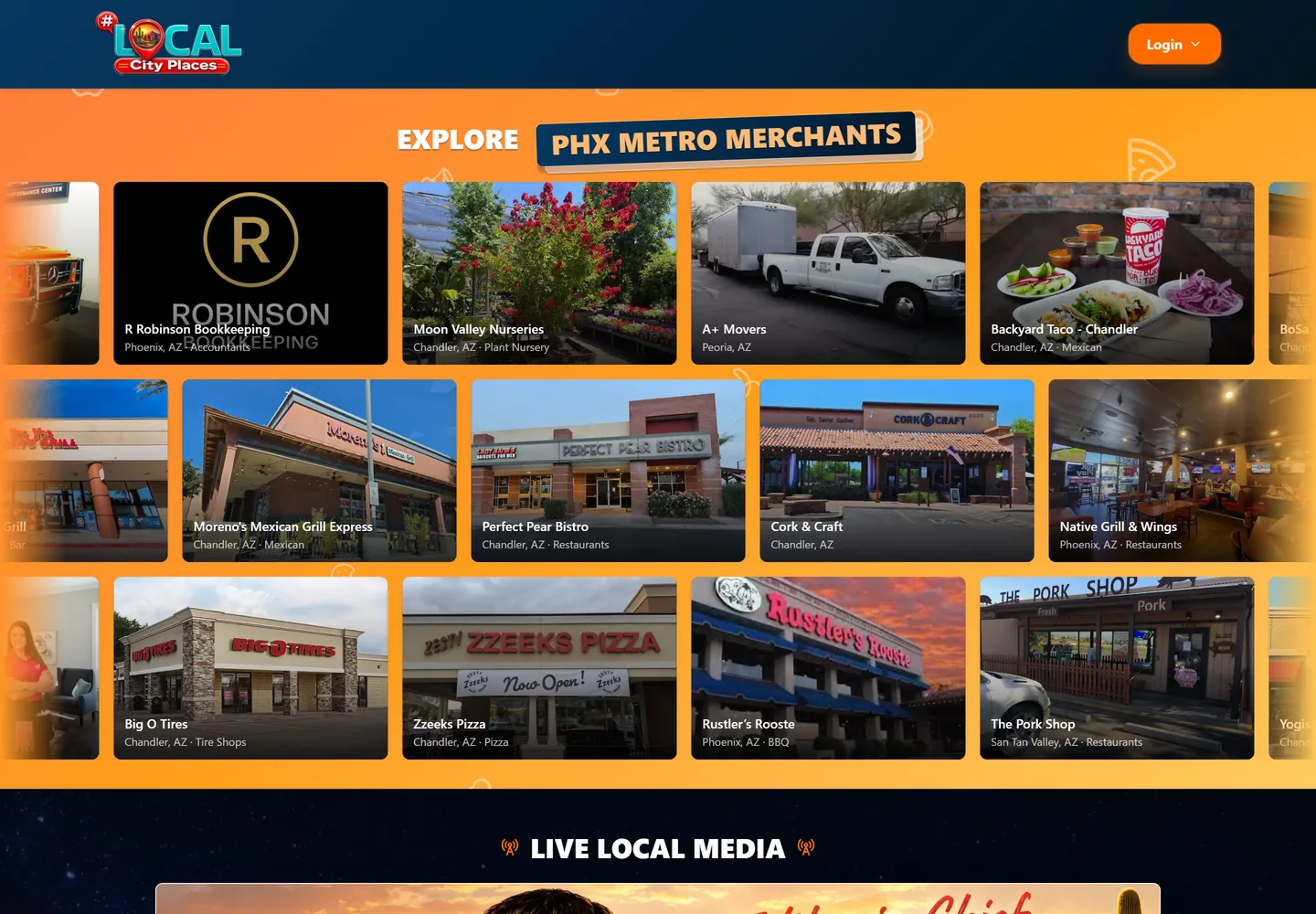
Case study · 04
2026 · Product design, content migration & development
Anne Newgarden
A legacy author site rebuilt as a static-first editorial platform.
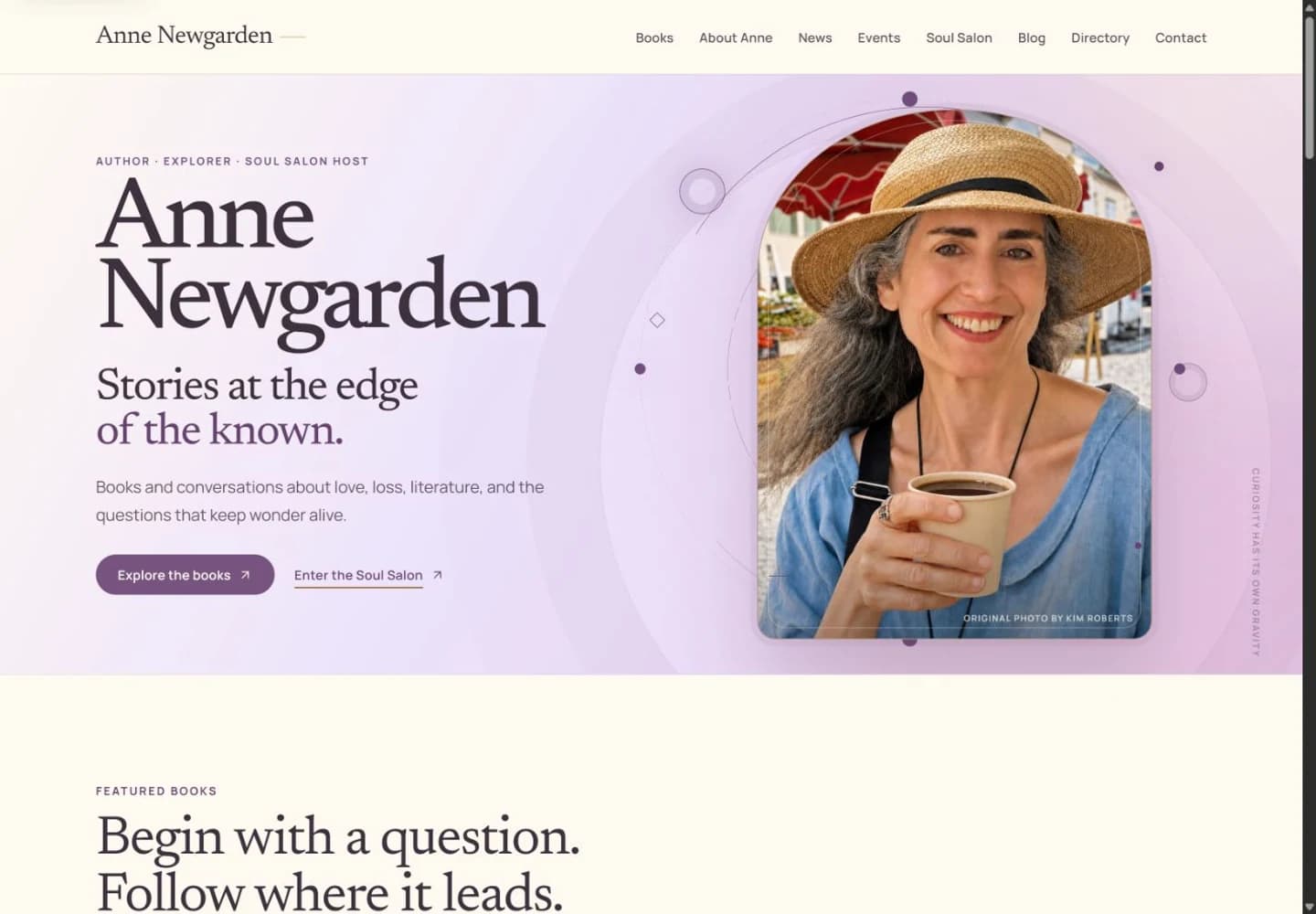
- Year
- 2026
- Role
- Product design, content migration & development
- Stack
- Next.js 16 · React 19 · TypeScript · Tailwind CSS 4 · Vercel
- Status
- The redesign is deployed on Vercel; the original WordPress site remains on annenewgarden.com
Selected views
The work, before the process.
Two representative views establish the range before the case study moves into the decisions behind them.
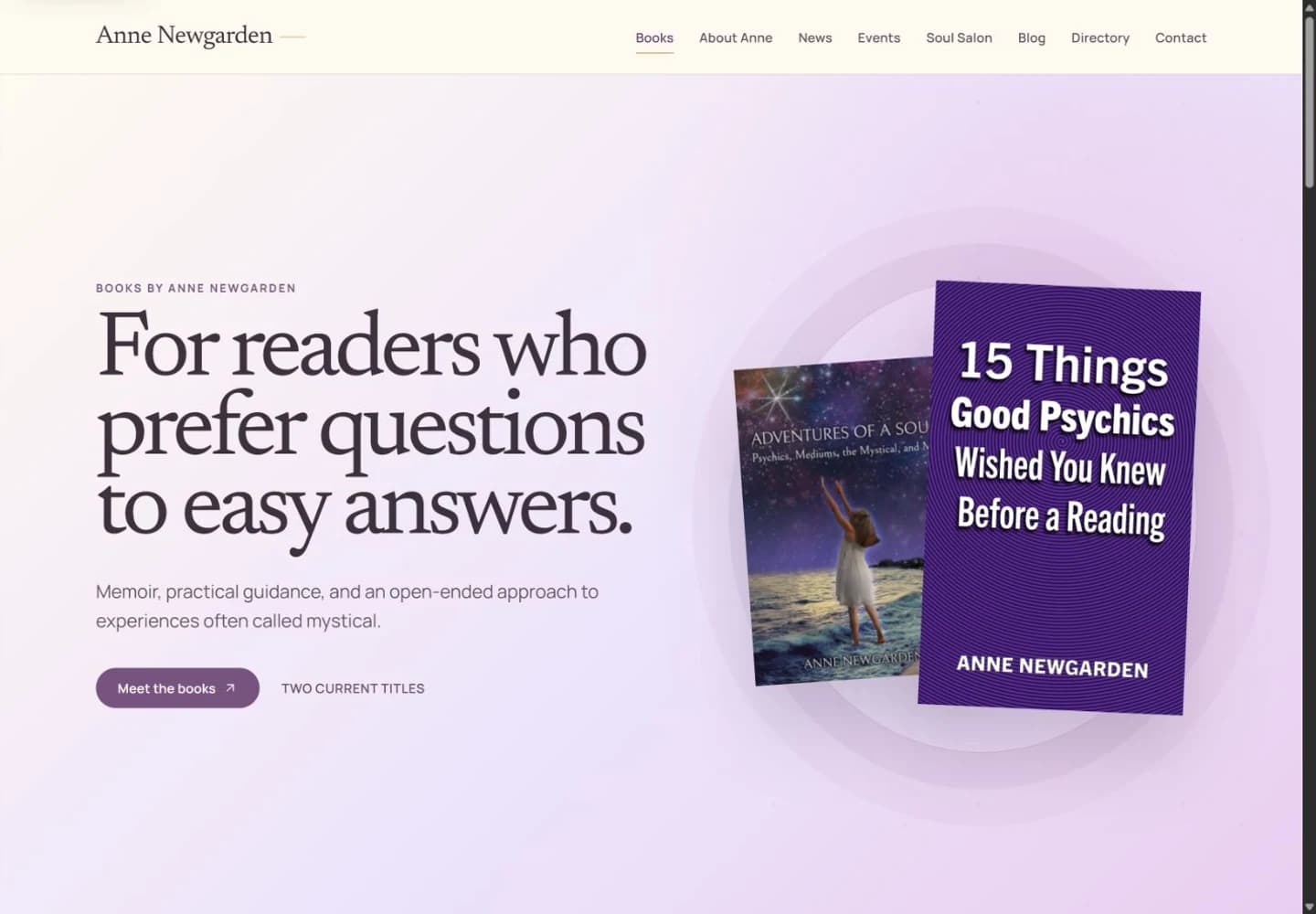
Books
A visual books destination separates the catalog from the author story and gives each title room to lead.
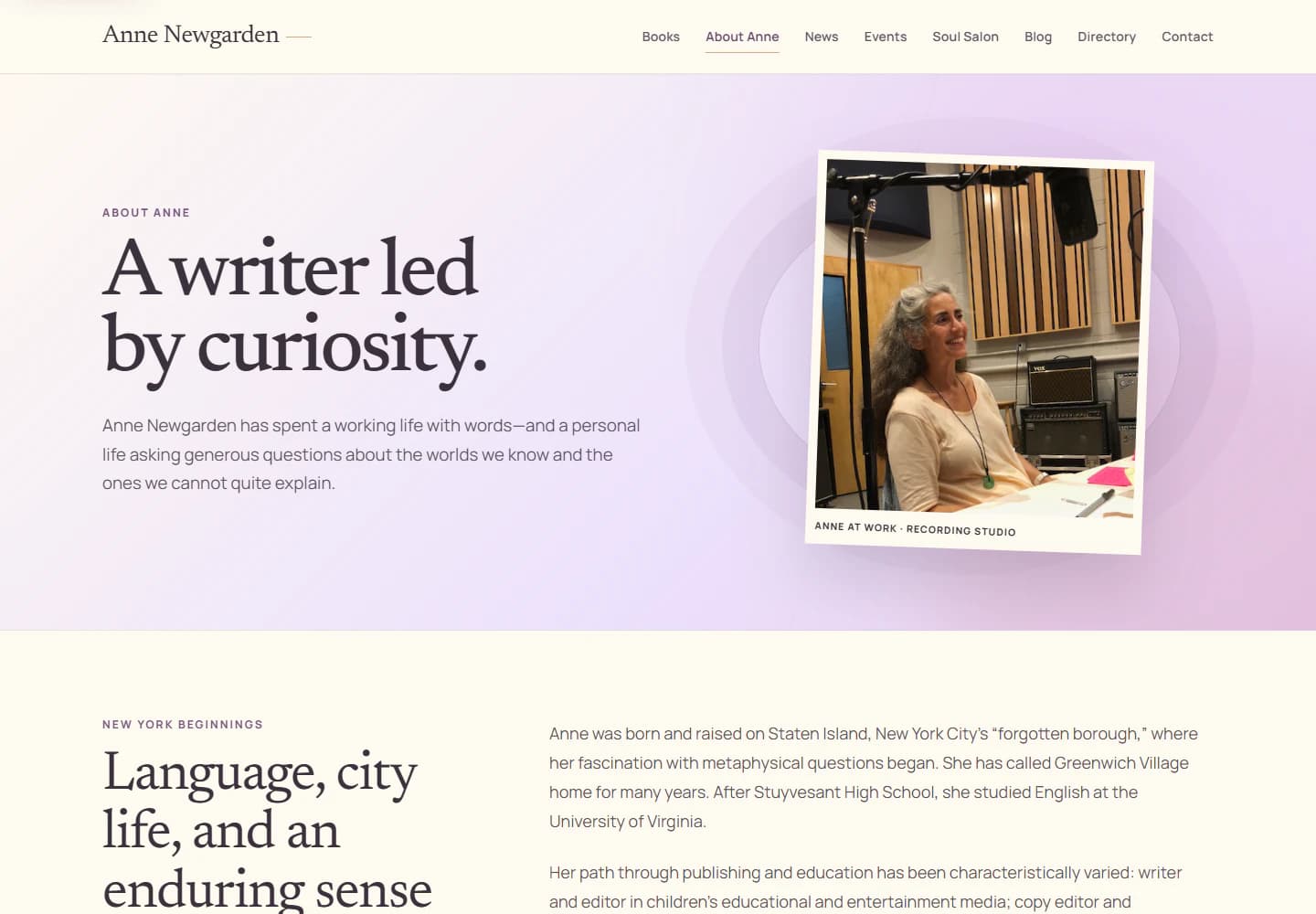
Author story
A quieter biography page connects Anne’s curiosity, writing, and lived experience.
Before / after
Same body of work. A clearer way into it.
The redesign replaces a dense, theme-led WordPress homepage with a deliberate editorial hierarchy for the author, books, writing archive, and Soul Salon. Drag the divider to compare the same opening viewport.
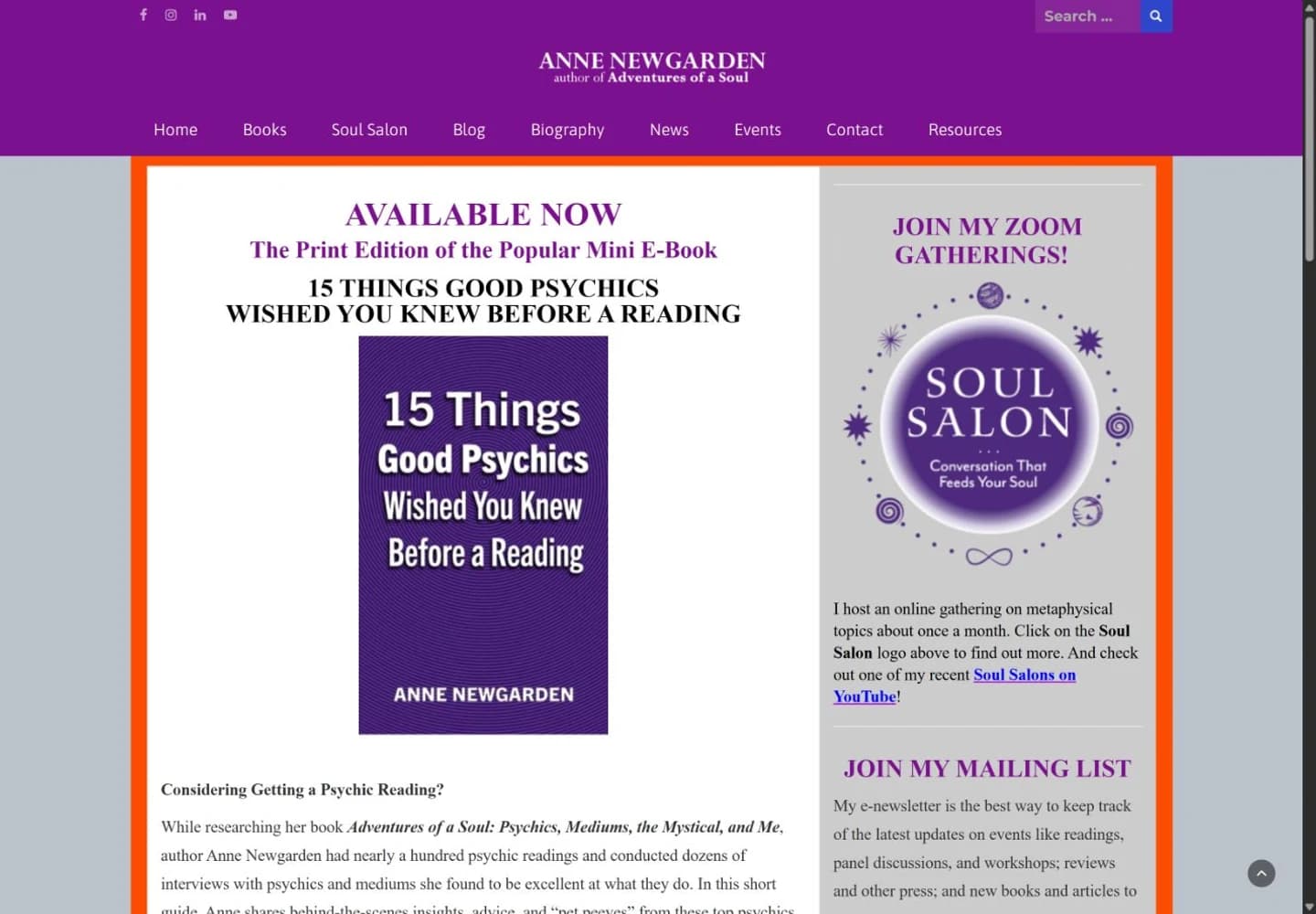
Use the left and right arrow keys, Home, or End to change the comparison.
Drag to compare the same viewport.
Project story
A long-running author archive reorganized around the work readers need now.
Anne Newgarden’s WordPress site held books, essays, appearances, Soul Salon material, news, events, and resources without a clear path through them. I redesigned the information architecture and visual system, then migrated the reviewed content into a version-controlled Next.js site.
The central challenge was editorial: make current work easy to find while preserving years of published material, familiar URLs, and the distinction between verified source material and unresolved claims.
01
ArchiveReaders needed a clearer way into years of work.
Readers arriving for a book, current event, Soul Salon, or practitioner resource met many years of material at once. The site needed a clearer front door without treating older work as disposable.
02
IntegrityA redesign could not rewrite the record.
Books, essays, events, and health-related accounts had to stay faithful to reviewed sources. Familiar paths and search value mattered; inactive features could not return as empty controls.
03
RebuildOrganize the archive first, then simplify the system.
I grouped the archive around current work, books, writing, events, and the directory, then gave each collection a clearer destination while preserving legacy paths into the new structure.
Decisions
Authentic source material stays distinct from generated art
Portraits, book covers, and documentary images use reviewed source material. A disclosed paper-sculpture motif appears only where no authentic image exists, including site-level share cards, and never depicts a named person or reported event as evidence.
Conflicting sources stayed conflicted
Conflicting source claims remained unresolved rather than being averaged into false certainty. Personal and health-related accounts stay attributed to the speaker.
Static by default, with one authorized exception
The inactive newsletter was removed rather than reproduced as a false control. Contact remains the single server-side path and reports success only after the delivery service accepts the message.
The build
A static publishing stack with one deliberate exception.
Next.js turns version-controlled editorial content into a complete static site; Vercel delivers it, while the contact path alone uses a server-side email service.
What I owned
- 01
Editorial product direction, information architecture, and responsive visual system
- 02
Migration of books, long-form articles, news, events, and directory content
- 03
Next.js App Router architecture with version-controlled static publishing
- 04
Metadata, structured data, legacy redirects, accessibility testing, and Vercel delivery
Technology roles
Editorial experience
- Next.jsStatic App Router pages and metadata
- ReactReusable editorial components
- TypeScriptTyped books, articles, events, and directory data
- Tailwind CSSResponsive visual and typography system
Delivery
- VercelStatic hosting, redirects, and deployment
- ResendServer-side delivery for the contact exception
System architecture
A static editorial system with no runtime CMS.
The rebuild turns migrated publishing content into pre-generated pages, keeping the public experience fast, portable, and easy to reason about while preserving the depth of the archive.
- Experience
Next.js 16 App Router, React 19, TypeScript, and Tailwind CSS 4
- Publishing
Version-controlled books, blog, news, events, and directory content
- Delivery
Static Vercel export with metadata, sitemap, robots, redirects, and headers
- Quality
Biome, Vitest, Playwright, and Axe accessibility checks
Selected screens
The system, seen in practice.
Readable views of the site and the system behind it.
Resource directory
Migrated recommendations become a concise, scannable directory instead of another long-form page.
Soul Salon
The recurring gathering receives its own focused story, invitation, and visual identity.
Writing archive
The migrated journal receives an editorial index with a direct path into long-form entries.
Current status
The redesign is deployed on Vercel; the original WordPress site remains on annenewgarden.comThe redesigned experience is publicly available on Vercel while annenewgarden.com continues to serve the original WordPress site pending domain cutover.
Discuss a similar project